
Category: 2025
-
A Solicitor’s Survival Guide to the Christmas Party Season
Ah, Christmas party season. That magical time when HR gets nervous, solicitors sharpen their pencils, and someone inevitably ends up dancing to Fairytale of New York on a table.
As a solicitor, I love a good knees-up as much as the next person. But I can’t help seeing the legal risks lurking behind the mistletoe. Call it occupational hazard. So here’s my tongue-in-cheek guide to surviving the office Christmas party — legally speaking.
🍷 The Drinks Flow Faster Than the Policies
Let’s be honest: once the prosecco starts flowing, so does the “banter.” But remember, what feels like a hilarious joke at midnight can look like Exhibit A in a tribunal come January. My advice? If you wouldn’t say it in front of your boss on a Monday morning, don’t say it after three mulled wines.
💃 Dance Floors and Duty of Care
Yes, the Macarena is technically a health & safety risk. No, employers don’t get to shrug it off just because the venue isn’t the office. If someone sprains an ankle doing the worm, there’s still a duty of care. (And yes, I’ve seen it happen. Twice.)
📱 Social Media Shenanigans
The Christmas party photo dump is fun until someone tags the firm in a picture of “Dave” from accounts asleep under the buffet table. Confidentiality breaches aren’t festive. My tip: keep your phone in your pocket and your dignity intact.
🎁 Inclusivity Isn’t Optional
Not everyone celebrates Christmas, not everyone drinks, and not everyone wants to wear a paper crown from a cracker. A truly inclusive party is one where everyone feels welcome — even the person who’s allergic to mince pies.
Christmas parties are meant to be fun, not fodder for litigation. So eat, drink, and be merry — but remember, the law doesn’t take a holiday.
And if you see me at the party, I’ll be the one sipping ginger ale, watching the dance floor like it’s a live case study. 🙂
-
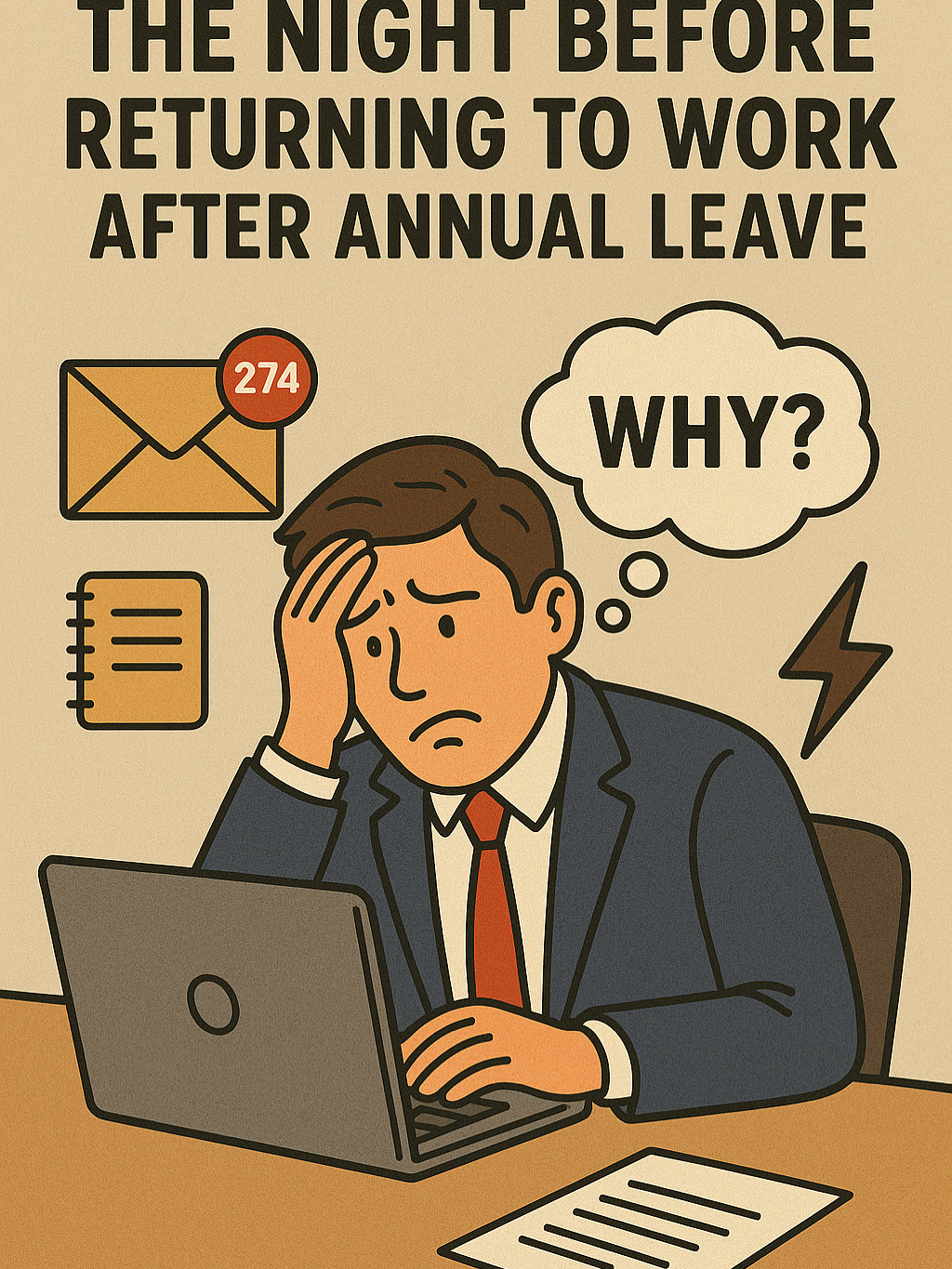
The Night Before: Returning to Word After Annual Leave
The Night Before: Returning to Work After Annual Leave as a Solicitor
There’s a special kind of Sunday Scaries that hits different when you’ve just had a week (or two, if you’re lucky) off. I find it hits hardest when you have been able to take the full two weeks off in one go. One minute you’re sipping cocktails, reading novels you’ll never admit to your colleagues, and pretending you’ve forgotten what an email is. The next… it’s 9pm, your suitcase is still on the floor, and your brain is running through all the horrors that Monday could bring.
Sound familiar? Let’s break this down and let me furnish you with a few tricks to make the transition back to the office a little less soul-crushing, whether you’re in the legal field or not – I think it is fair to say this will strike true for most!
⸻
The Emotional Rollercoaster
- The “Inbox Dread” Stage
You don’t even need to open Outlook to know. The unread count will be there, waiting. Like a digital monster crouched behind your login screen. And even though you had a perfectly lovely time away, you can’t help but wonder if half the profession has collapsed without you. Spoiler: it hasn’t. (Probably.)
- The Sudden Productivity Panic
You’ve just remembered: that matter you swore you’d “pick up after holiday” is now after holiday. Cue lying awake at midnight, mentally drafting attendance notes, while your partner reminds you that whispering “land registry” in your sleep is not normal.
- The Existential Reflection
Why am I even doing this? Maybe I should just move to a Greek island and open a beach bar? I was so much happier not checking emails for a week. (This phase usually lasts until about 11:30am Monday, when you remember you quite like getting paid.)
⸻
How to Survive the Night Before
1. Set a Gentle LandingDon’t roll into Monday with back-to-back deadlines. If you can, block out the first hour to just read through your emails and get your bearings. You’ll thank yourself later.
2. Unpack More Than the SuitcaseEmpty the mental suitcase too. Write down the three biggest tasks you know are waiting. Getting them out of your head makes them far less intimidating.
3. Inbox TriageYes, there will be emails. No, you don’t have to reply to all 274 of them before lunch. Skim, delete, delegate, and prioritise. Remember: not everything that says “URGENT” is actually urgent.
4. Keep the Holiday Spirit AliveBring a little of the holiday back with you. Coffee in your favourite mug, lunch outside if it’s not raining (…so, not often), or even setting a holiday photo as your background. It’s a small reminder you’re more than your billable hours.
5. Plan Something to Look Forward ToWhether it’s dinner with a friend mid-week, a swim before work, or simply a nap worthy of a toddler — give yourself a mini “holiday” moment to soften the crash landing.
⸻
Final Thoughts
Returning from annual leave as a solicitor can feel like running into a tidal wave of tasks, deadlines, and client demands. But with a little preparation (and a sense of humour), you can keep the Sunday Scaries from taking over. Remember: the inbox will always be full, the diary will always be busy, but your sanity is worth protecting.
Besides, it’s only a few weeks until your next annual leave request, right?
⚖️ Solicitor by day | 🚢 Cruising the seas and navigating the law | Sharing legal tips & travel tales | 📲 Follow my journey on Instagram | Threads | TikTok | BlueSky |
-
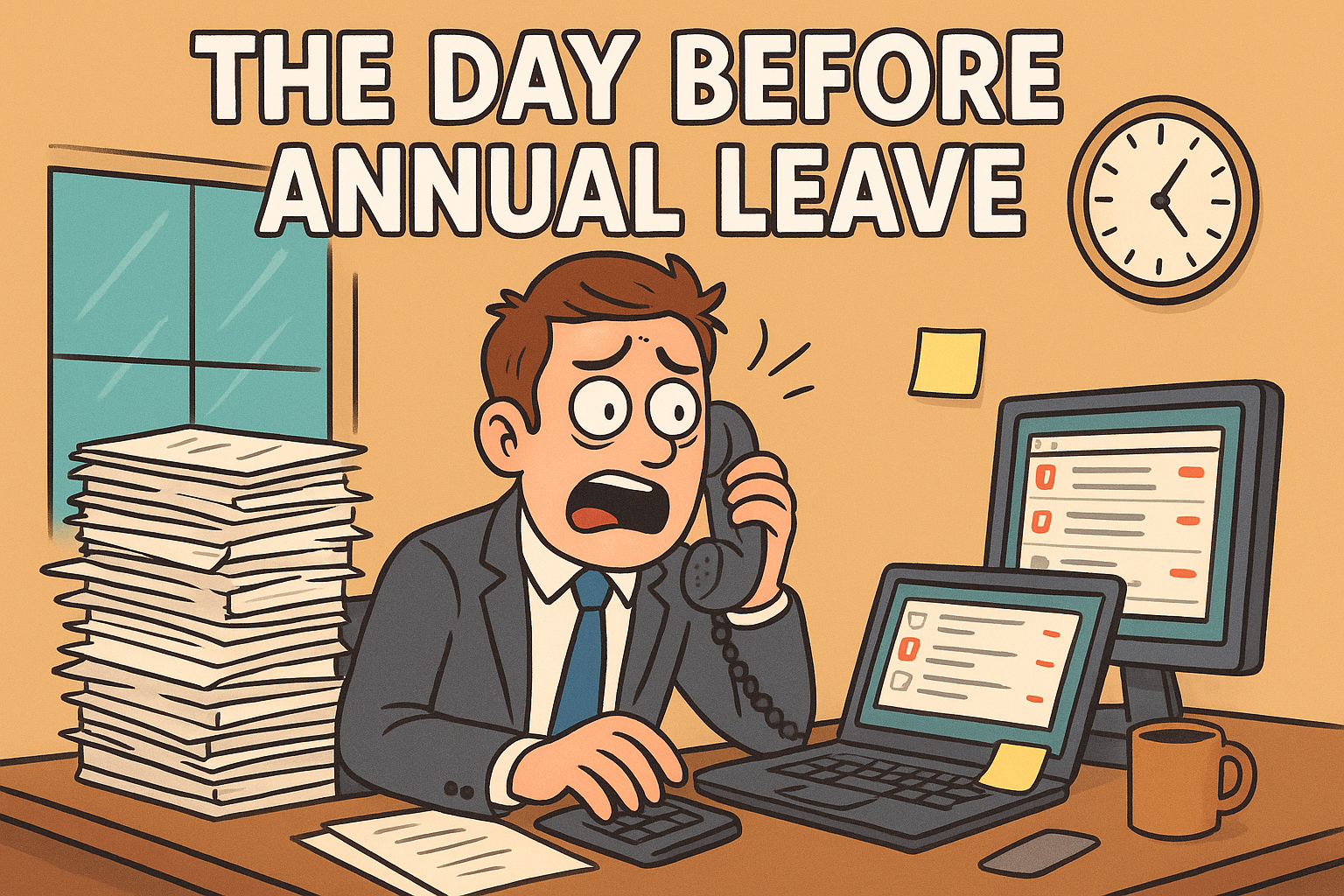
The Day Before Annual Leave: A Solicitor’s Survival Guide
The Day Before Annual Leave: A Solicitor’s Survival Guide
There are few feelings more glorious than that “last day before holiday” buzz. You can almost smell the sunscreen, hear the clink of ice in a glass, and feel the warm breeze — until reality smacks you in the face. Because you’re not just you… you’re you the solicitor, or in my case – a private client solicitor. And there are those few clients that still think you should be at their call any time including when you are on annual leave. This just adds got the stress of the 24 hours before annual leave which is less “relaxed packing” and more “triage unit in a war zone”.
Let’s go through the stages I experience in the 24 hours up to the big event!
Stage 1. The Inbox Clearance Mission
The mythical dream is to “get everything done” before you go. The reality? It’s 5:45pm, you’ve been replying to emails since 7am, and your inbox somehow now has more unread messages than it did this morning. You’ve just sent an “I’ll deal with this when I get back” holding reply… and instantly get an “URGENT – NEED THIS TODAY” email marked high importance.
And yes, it’s from the client who ghosted you for three weeks. Naturally.
At the end of the day, there is only so much you can do. So, I do what I can – send that holding email and leave it there. If it is something that cannot absolutely wait, then I will ask a colleague to keep things “ticking” over in my absence but I find that most of the time, these matters can wait for a week or two, especially during the summer months, when most other colleagues and court officials are also on leave.
⸻
Stage 2. The Pre-Holiday Panic Call
Without fail, the day before you leave, someone will ring you at 4:59pm with:
“I know you’re going away, but can you just quickly…?”
No. No, I cannot just quickly. “Quickly” in legal time means anywhere between 45 minutes and a full working day. But instead, you’ll find yourself typing like a caffeinated court reporter, muttering under your breath about how “this will definitely be my last-minute task”. Spoiler: it won’t be.
⸻
Stage 3. The Hand-Over Dance
Every solicitor knows the awkward joy of the handover note. It’s like passing on the baton in a relay race… except the baton is on fire, the track is made of Lego, and you’ve “just remembered” a crucial deadline halfway through writing it.
The trick? Make it detailed enough so your colleague knows what’s going on, but vague enough so if things go wrong, it’s technically a “grey area”.
⸻
Stage 4. The Pre-Leave Guilt
Somehow, you’ll start feeling guilty for going away, as if you’re personally betraying the legal profession or that colleague who you have passed some cases over too by daring to spend a week somewhere that isn’t your office or the land registry portal. You’ll catch yourself saying things like:
“I’ll have my phone if you need me!”
Don’t do this. We both know you’ll be sipping something fruity on a balcony while pretending to read The Times app.
⸻
Stage 5. The Final Office Sweep
You know you’re about to be gone for more than a weekend when you start doing “the sweep”:
•	Delete any mysterious sticky notes that might incriminate you.
•	Check your desk drawer for snacks that may evolve into new lifeforms.
•	Turn off your monitor like you’re locking the front door of Fort Knox.
And yes, double-check the out-of-office email. You can’t risk last year’s blunder where you accidentally left it saying:
“I’m on leave until 2019.”
⸻
Stage 6. The Moment of Liberation
Finally… it’s time. Laptop shut. Lights off. One last “have a nice holiday!” from the team. You step outside, take a deep breath, and feel the sweet release. For the next week or two, your only deadlines involve SPF reapplication and booking dinner reservations.
Until you get that one email that says:
“Hope you’re having a great time — quick question…”
⸻
Moral of the story: The day before annual leave as a solicitor is a high-stakes, high-speed marathon. But that first cocktail on arrival? Worth. Every. Second.
⚖️ Solicitor by day | 🚢 Cruising the seas and navigating the law | Sharing legal tips & travel tales | 📲 Follow my journey on Instagram | Threads | TikTok | BlueSky |
-
What’s It Really Like Being a Solicitor in Northern Ireland?
Being a solicitor in Northern Ireland isn’t just a job—it’s an experience shaped by unique cultural, professional, and economic dynamics. Whether you’re a trainee just starting out or years into the game, you might have already noticed that the legal landscape here has its fair share of quirks, perks, and challenges.
But have you ever taken a step back and really thought about what sets it apart?
The Good Bits (and There Are Plenty)
A Tight-Knit Legal Community
Northern Ireland’s legal scene is relatively small, and that can be a real advantage. You’re more than just a number here—colleagues, counsel, and even judges tend to become familiar over time. This kind of close-knit environment can make building relationships, trust, and a professional reputation feel more achievable.
Have you ever benefited from the closeness of the profession here—or found it a bit too tight for comfort?
Diverse Work Early On
Unlike in some larger jurisdictions, junior solicitors in Northern Ireland often gain broad exposure across different practice areas. In a single week, you might touch on conveyancing, wills, litigation, and family matters. It’s a crash course in versatility. This off course will depend on what firm you are training with. Some firms may not venture much into the realms of litigation or criminal law for instance.
What would you do if you were thrown into a case well outside your comfort zone—embrace the challenge or panic first, learn later?
Work-Life Balance Potential
Shorter commutes, lower living costs, and less of the “always-on” culture of bigger cities can make balancing work and life more manageable here—if you’re in the right firm.
How do you feel about your current balance? Could you imagine trading some prestige for more peace of mind?
And Then, the Challenges…
A Competitive, Strained Market
Let’s not sugar-coat it—legal aid cuts, fee pressure, and an oversupply of graduates make the market tough. Smaller firms in particular can feel the pinch.
What would you do if your firm began cutting back or restructuring? Are you prepared—or just hoping for the best?
Mental Load and Burnout
Solicitors in Northern Ireland face the same long hours, high expectations, and emotionally draining cases as elsewhere—but often with fewer resources. While support is improving, talking about burnout still feels taboo in many circles.
How do you deal with the emotional toll of the job? Is there enough space to talk honestly about wellbeing in your workplace?
So… Is It Worth It?
The answer will differ for everyone. Some days, the work is meaningful, the pace rewarding, and the people around you make it all worthwhile. Other days? Well, we all know how those go.
If you could go back to day one of your legal career—would you still choose this path? Or has it made you rethink what you really want from your work and life?
⚖️ Solicitor by day | 🚢 Cruising the seas and navigating the law | Sharing legal tips & travel tales | 📲 Follow my journey on Instagram | Threads | TikTok | BlueSky |
-

Drowning in Admin? How TextExpander Can Be a Solicitor’s Secret Weapon
As a solicitor, your days are a relentless whirlwind of client calls, drafting documents, possible court appearances, and, let’s be honest, a mountain of administrative tasks. While you’re dedicated to providing the best legal help to your clients, the sheer volume of repetitive typing can eat into your valuable time – time that could be spent on other matters that require that legal brain.
This is where an unassuming yet incredibly powerful app called TextExpander steps in. Think of it as your personal typing assistant, ready to instantly transform short abbreviations into frequently used phrases, paragraphs, or even entire documents. For solicitors, it’s not just a convenience; it’s could be a game-changer for administrative efficiency.
What is TextExpander and How Does It Work?
At its core, TextExpander allows you to create “snippets” – blocks of text that you frequently type. You then assign a short “abbreviation” to each snippet. When you type that abbreviation anywhere on your computer (emails, Word documents, case management software, even your browser), TextExpander automatically expands it into the full text.
For example:
- Instead of typing “Yours faithfully, [Your Name], Solicitor at [Your Firm Name]” every time, you could type
yfsigand have it instantly expand. - Need to insert a common legal disclaimer? Type
discland watch it appear. - Regularly use a specific clause in contracts? A few keystrokes for
clc1could save you minutes of typing and ensure consistency.
How TextExpander could Empower Solicitors in Their Administrative Tasks:
The benefits for legal professionals are immense:
- Turbocharge Document Drafting:
- Boilerplate Clauses: Easily insert common clauses for contracts, Wills, or other legal documents.
- Conveyance Contract Special Conditions – I use this often to insert my more frequent used special conditions into contracts.
- Streamline Client Communication:
- Standard Email Responses: Draft and save snippets for common client queries, status updates, or requests for information.
- Onboarding Information: Quickly send out welcome packets, engagement letters, or intake forms.
- Fee Agreement Language: Standardise your fee agreement terms with easy-to-insert snippets.
- Enhance Accuracy and Consistency:
- Eliminate Typos: When TextExpander types for you, it’s 100% accurate every time, reducing the risk of costly errors in critical documents.
- Uniformity Across the Firm: Share snippet libraries with your team to ensure consistent language, branding, and legal terminology across all communications and documents. This is particularly valuable for larger firms.
- Save Precious Time (and Billable Hours!):
- The time spent on repetitive typing adds up. TextExpander users often report saving hours per week, allowing solicitors to focus on higher-value, billable work, or simply reclaim their evenings.
- Imagine the cumulative time saved by not typing out your firm’s full address, your contact details, or common court names dozens of times a day.
- Simplify Administrative Chores:
- Meeting Notes: Quickly insert common phrases or questions during client meetings or court hearings.
- File Naming Conventions: Standardize how you name and date files with automated snippets like
ddateexpanding to the current date in your preferred format. - Billing Entries: If your time and billing software accepts text input, you can even use TextExpander for quick descriptions of common tasks.
Beyond the Basics: Advanced TextExpander Features for Legal Practices
TextExpander offers more than just simple text replacement:
- Fill-in Fields: Create snippets with interactive fields that prompt you for specific information (e.g., client name, date of birth, case number) when you expand them, ensuring documents are customized effortlessly.
- Date and Time Calculations: Automatically insert future or past dates, perfect for deadlines or scheduling reminders.
- Optional Sections: Include sections in your snippets that can be toggled on or off as needed, providing flexibility for different scenarios.
- Shared Snippets: For legal teams, TextExpander allows for easy sharing of snippets, ensuring everyone is using the same, approved language and templates.
The Verdict: A Small Investment, a Massive Return
In a profession where every minute counts, I have personally found this app a time saver and very useful. There are other apps out there which may be cheaper or free but I have used this one for so many years and love it.
It may not be for everyone but it is worth giving it a shot to see just how much time you could save on not having to repeat and type the same things over and over.
⚖️ Solicitor by day | 🚢 Cruising the seas and navigating the law | Sharing legal tips & travel tales | 📲 Follow my journey on Instagram | Threads | TikTok | BlueSky |
- Instead of typing “Yours faithfully, [Your Name], Solicitor at [Your Firm Name]” every time, you could type
-

🎩 The Conveyancer’s Survival Guide: Dealing with the Dreaded Difficult Opponent 🎩
Ah, conveyancing — the noble dance of property transactions. A world that involved land registry, client hand-holding, and the eternal wait for the missing management pack or forgotten searches! (I am off course not entirely innocent in this, but for the purposes of writing this post, lets assume I am perfect!)
But nothing — and I mean nothing — tests the patience of a conveyancing solicitor quite like dealing with that solicitor on the other side. You know the one. They treat email replies like fine wine (must mature for 5-7 working days), CC their entire firm in every correspondence (OK a bit of an exaggeration), and will die on the hill of a missing “the” in the contract.
So grab your de-caff tea, straighten your tie (or hoodie, no judgment), and let’s dive into the delightfully awkward ballet of dealing with difficult counterparts in conveyancing.
🏠 The Curious Case of the Unresponsive Solicitor
Let’s start with the classic: The Phantom. They vanish for days, only to return with a one-line email asking for a document you sent last Tuesday—twice.
Survival Tip:
Forward the original email with attachments and a cheery note like:
“Just in case the document got lost in the property dimension 😊”
Bonus points if you reference Mercury being in retrograde.
📞 The Over-Talker
These folks call instead of emailing. A lot. They begin with the weather, detour through Brexit (in the good old days, more likely this hot weather at the moment in the UK), and eventually meander their way to asking if the searches are back.
Survival Tip:
Politely steer the conversation like a canal boat captain. Try:
“Lovely to catch up! Let’s pop it in writing so we’ve got a clear trail for both clients. I’ll follow up now.”
Then swiftly hang up and run for caffeine.
⚖️ The Drama Queen (or King)
They threaten to collapse the deal over something very simple and fixable with the appropriate indemnity insurance policy. They use phrases like “wholly unacceptable” and “deeply concerning” about something which in the grand scheme of things should not even being discussed by solicitors.
Survival Tip:
Channel your inner yoga instructor. Breathe in calm, breathe out sarcasm. Reply factually, not emotionally.
And if it gets too much, remember: the delete button is only symbolic for your feelings. Not legally binding.
💌 The Passive-Aggressive Emailer
You’ll spot them by their signature move:
“As previously stated…”
Or worse, the triple full stop…
Survival Tip:
Match their tone? No. Rise above it, but with flair.
Try:
“Thanks for your email. Just to confirm, we’re on the same page here…” or gently remind them we are all working towards the same goal – sale/purchase of a house that everyone wants to complete.
Sprinkle in a smiley face if you’re feeling spicy. 😊
😎 Top Tips for Navigating the Conveyancing Jungle
- Keep Records Like a Victorian Archivist – Every email, every call. You never know when you’ll need to play the “well actually…” card.
- Use Templates – The best armour is a good standard reply. Saves time and emotional energy. I also use an app called TextExpander but there are alternatives – saves a huge amount of time for phrases, emails or text you use often.
- Celebrate Small Wins – Completion statement balanced? Reward yourself with a biscuit.
- Practice Legal Mindfulness – Repeat after me: “It’s just a house. It’s just a house. It’s just a house…”
- Vent (Responsibly) – Group chat rants are essential. Just don’t accidentally reply all. Talk to the legal secretaries, have a fellow colleague whom you can trust and vent too.
🏁 Final Thoughts
Working with a difficult solicitor is part of the great UK conveyancing experience. Like rain in July or overcooked tea—annoying, inevitable, and vaguely comforting in its predictability.
So next time you find yourself staring at an email that reads like a Jane Austen rejection letter, just smile. Remember: You’re the reasonable one. The calm, capable, caffeine-fuelled legal wizard bringing people closer to their dream home—despite the chaos.
Now go forth and complete! 🏡
⚖️ Solicitor by day | 🚢 Cruising the seas and navigating the law | Sharing legal tips & travel tales | 📲 Follow my journey on Instagram | Threads | TikTok | BlueSky |
-

Kindness Isn’t Weakness: Why It Matters in Law.
In a profession often associated with sharp suits, sharper words, and the relentless pursuit of results, kindness might not seem like a core legal skill. But here is something I have found: kindness is a quiet superpower. As solicitors, we’re trained to advocate, to challenge, and to push boundaries — but please, not at the cost of our humanity. Whether it’s with clients, colleagues, or the unsung heroes behind the scenes (yes, I’m talking about the admin staff who actually keep the place running), kindness matters.
With Clients: Building Trust, Beyond the Billable Hour
Clients come to us in some of the most stressful moments of their lives — buying a home, ending a marriage, facing criminal charges, or fighting for their business. They need more than legal jargon and timesheets. They need reassurance. They need someone who listens without rushing, explains without patronising, and shows empathy without judgement.
Kindness here doesn’t mean sugar-coating the facts or avoiding difficult truths. I have found that it means delivering them with respect and compassion. A kind solicitor is memorable — not because they charged the least, but because they treated the client like a human being, not just a file number.
With Colleagues: Drop the Ego, Lift the Team
Law firm culture can sometimes be… intense. Long hours, big egos, and internal competition can breed a “survival of the fittest” mentality. I found this especially true when trainees were fighting for that hard to get training contract – cut throat! But I am proof that it doesn’t have to be that way. I have always found in my career that the best teams — the ones that are resilient, productive, and dare I say, enjoyable to be in — are rooted in mutual respect and kindness.
That means checking in on the junior who’s drowning in bundles. That means giving credit where it’s due, not just when it benefits your reputation. That means saying thank you — yes, even in an email.
Kindness isn’t soft. It’s strategic. It builds loyalty, improves morale, and frankly, makes the workplace more tolerable for all of us.
With Admin Staff: No Kindness, No Functioning Office
I have absolutely no doubt that without the admin staff — receptionists, secretaries, post-room heroes and others — our legal empires would collapse. And yet, too often, they’re overlooked or spoken to as if their roles are somehow lesser. They’re not.
Kindness here is simple: Treat admin staff with the same respect you’d give to a senior partner. Learn their names. Say good morning. Don’t dump last-minute tasks on them without context or gratitude. Recognise that their contribution is critical, not optional.
In my experience, the solicitors who are consistently kind to admin staff tend to be the ones everyone wants to work with — and that reputation sticks.
Final Thoughts: Kindness Isn’t a Luxury — It’s a Legacy
As lawyers, we deal in rights, duties, and obligations. But let’s not forget the human side of law. Kindness doesn’t dilute professionalism — it deepens it. It builds trust, reduces conflict, and creates a working environment where people feel seen and valued.
You won’t find kindness in the Solicitors Regulation Authority’s Code of Conduct or Law Society guidelines. But you will find it in every truly great lawyer I’ve ever met.
And if we’re going to spend 60+ hours a week doing this job — we might as well do it in a way that leaves people better than we found them.
Written by a solicitor who believes in being decent, even when the deadline looms and the printer’s jammed again.
Links to Social Media Accounts
Instagram – @learninglawyeruk
Twitter – @LearningLawyer
Threads – @learninglawyeruk -

Making the Most of Research and Minor Tasks as a Trainee Solicitor
Starting as a trainee in a law firm can be both exciting and overwhelming. You’ve spent years studying, passed rigorous exams, and now you’re finally stepping into the world of legal practice. However, instead of immediately drafting high-profile contracts or representing clients in court, you find yourself tasked with legal research, bundling, and other seemingly minor duties.
It’s easy to feel disheartened, but these tasks are far from insignificant. In fact, they are crucial stepping stones in your development as a solicitor. You probably know the phrase, “We all start somewhere…” well that is true. I and others have been in the same boat and it is a good way to learn and prove yourself. Consider the following thoughts:
1. Embrace Research as a Core Skill
Legal research is fundamental to being a successful solicitor. Whether you’re drafting advice, preparing for litigation, or reviewing contracts, you need to be adept at finding, analysing, and applying legal principles. When assigned a research task:
- Be methodical – Understand the question fully before diving in.
- Use reputable sources – Prioritise primary sources such as case law, legislation, and official commentary.
- Summarise effectively – Clear, concise research notes will be invaluable to both you and your supervisor.
Mastering research now will make you a more efficient and reliable solicitor in the future.
2. Understand the Purpose of ‘Minor’ Tasks
It’s tempting to see administrative tasks as beneath you, but these jobs serve an important function. Drafting attendance notes, bundling documents, and proofreading documents all develop attention to detail and organisation—key skills for any solicitor.
Additionally, these tasks offer insight into case progression and legal processes. By carefully reviewing documents and filings, you gain a deeper understanding of how the law is practically applied.
3. Ask Questions and Seek Feedback
Trainees are not expected to know everything, even seasoned solicitors do not know everything! When given a task, clarify expectations and ask about the bigger picture. Understanding how your work fits into the case or transaction makes the task more meaningful and helps you retain information.
After completing an assignment, seek feedback. Constructive criticism is invaluable for growth, and showing a willingness to learn demonstrates initiative and professionalism.
4. Go the Extra Mile
When conducting research, don’t just answer the immediate question—consider related legal issues that might be relevant. If you’re compiling a bundle, organise it in a way that makes it easy to navigate. Going beyond the bare minimum will make an impression on your master/trainor and help establish your reputation as a proactive trainee.
5. Stay Positive and Professional
Your attitude is just as important as your legal knowledge. A positive, eager-to-learn approach will be noticed by your supervisors. Law firms value trainees who are adaptable, hardworking, and engaged.
6. Recognise the Long-Term Benefits
As I said at the start, every solicitor starts somewhere. The partners and senior associates you admire once did the same research and admin tasks. These early experiences lay the groundwork for your future career. The ability to research quickly, draft precisely, and manage documents effectively will serve you throughout your legal journey.
Final Thoughts
Rather than seeing research and minor tasks as chores, view them as building blocks of your legal career. Approach each task with curiosity, diligence, and a desire to improve. By doing so, you’ll not only gain essential legal skills but also develop a strong reputation within your firm—an invaluable asset as you progress from trainee to qualified solicitor.
⚖️ Solicitor by day | 🚢 Cruising the seas and navigating the law | Sharing legal tips & travel tales | 📲 Follow my journey on Instagram | Threads | TikTok | BlueSky |
-

Coping with Failure in Law Exams: SQE1, LPC, and Beyond.
It is that time of year where results from SQE are published as well as in Northern Ireland the IPLS. Failure in a law exam—whether it’s the SQE1, LPC, IPLS or any other legal qualification—can feel like a gut punch! And I have had my own fair share of those. After all you’ve put in hours of study, sacrificed sleep (and perhaps sanity), and then, the dreaded result arrives. But here’s the truth: failing an exam doesn’t define you as a lawyer, nor does it mean your legal career is over. It’s a setback, not a life sentence.
So here are my thoughts and musings on this, just to add my money’s worth to all the other sears who have posted similar elsewhere.
1. Allow Yourself to Feel Disappointed (Briefly)
Failing a law exam is frustrating, and it’s okay to feel disappointed. Allow yourself a short period to process the result—whether that means venting to a friend, indulging in comfort food, or spending a day sulking. But set a time limit. The longer you dwell on the failure, the harder it becomes to bounce back.
2. Reframe the Narrative
Many successful lawyers have failed exams along the way. Some of the brightest legal minds have faced setbacks but went on to achieve incredible careers. Failing an exam is not proof that you’re not cut out for law; it’s simply proof that you need a new strategy.
3. Analyze What Went Wrong
This part is crucial. Understanding why you failed is the key to passing next time. Ask yourself:
- Did I underestimate the difficulty of the exam?
- Was my study technique ineffective?
- Did I run out of time during the exam?
- Was stress or burnout a factor?
- Do I need extra support (e.g., tutoring, study groups, or better materials)?
If possible, review your exam performance breakdown to identify weak areas. For example, in SQE1, were multiple-choice questions your downfall? In the LPC, was it essay structure or legal drafting? In the IPLS where it uses negative marking, what areas did you come short on? Again was it just a time issue?
4. Adapt Your Study Strategy
Once you’ve identified what went wrong, tweak your approach. Some key adjustments might include:
- Active Learning: Swap passive reading for problem-solving exercises and practice questions.
- Timed Practice: Simulate exam conditions to improve time management.
- Structured Study Plan: Stick to a timetable that covers all key topics.
- Seek Help: Join a study group, find a tutor, or use online resources. Speak to others who succeeded and ask for their advice and tips.
5. Take Care of Your Mental Well-being
Failure can knock your confidence, but your mindset plays a massive role in success. Avoid the downward spiral of self-doubt by focusing on self-care:
- Maintain a balanced routine with breaks and exercise.
- Speak to others who’ve been in your shoes.
- Stay positive and keep perspective—this is just one step in a long career.
6. Plan Your Comeback
Failing once doesn’t mean failing forever. Set a clear, structured plan for your next attempt, incorporating what you’ve learned. Set realistic but ambitious goals, and remind yourself why you started this journey in the first place.
7. Remember: You Are Not Alone
Legal exams are tough, and failing one is more common than you might think. Reach out to peers, mentors, or online legal communities for support and motivation.
Keep going—your legal career is still very much within reach!
Don’t forget to check me out and sign up
⚖️ Solicitor by day | 🚢 Cruising the seas and navigating the law | Sharing legal tips & travel tales | 📲 Follow my journey on Instagram | Threads | TikTok | BlueSky |